In weddings across cultures, what feels natural in one place can quietly mean something very different in another.
In many Western weddings, the role of caring for the bride and groom belongs to people who are emotionally close to them — family members or the bridal party. Helping with a dress, accompanying the bride to a restroom, or adjusting something small is not seen as a task, but as a gesture of trust and closeness.
In Japan, however, there is a long-established professional role known as the kaizoe — a bridal attendant whose responsibility is to support the bride throughout the day. This support is designed to be discreet and precise: smoothing a gown, adjusting details, assisting during meals, and ensuring that nothing distracts from the ceremony itself. From a Japanese perspective, this is a form of respect.
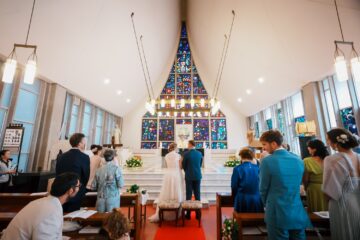
Years ago, when we were still applying this Japanese approach to international weddings, we were reminded how differently the same act could be perceived. While assisting a bride in the traditional Japanese way, we were gently told by a photographer and other international staff that our presence was distracting. The bridal party and family, they explained, were meant to be the ones offering that care. It was not only more meaningful for the couple — it was also more beautiful in photographs.
No one was wrong. Both approaches came from care.
But they were caring for different things.
In one case, the priority was precision, professionalism, and not imposing on guests. In the other, it was intimacy, trust, and the visible presence of loved ones. When these two ideas meet in the same space, what becomes complicated is not efficiency, but meaning.
From that experience, we learned that “support” in a wedding is not just about what is done, but about who does it, and why. Sometimes the most thoughtful choice is not the most organized one, but the one that preserves the emotional fabric of the moment.
These are the kinds of differences that do not show up in schedules or contracts. They live in assumptions — in what each culture quietly believes a wedding should feel like.
And they are often where the most important planning happens.
0 Comments